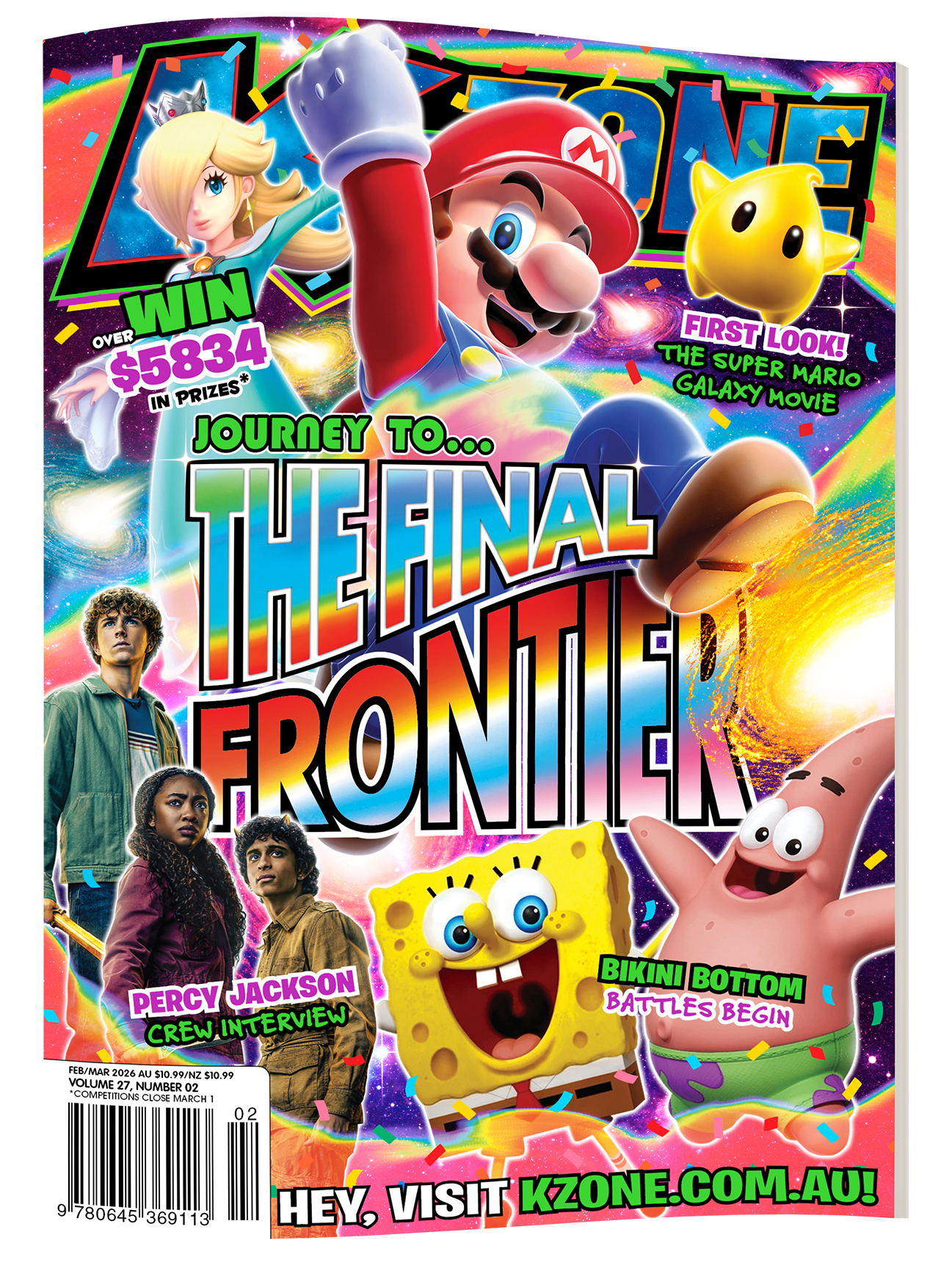
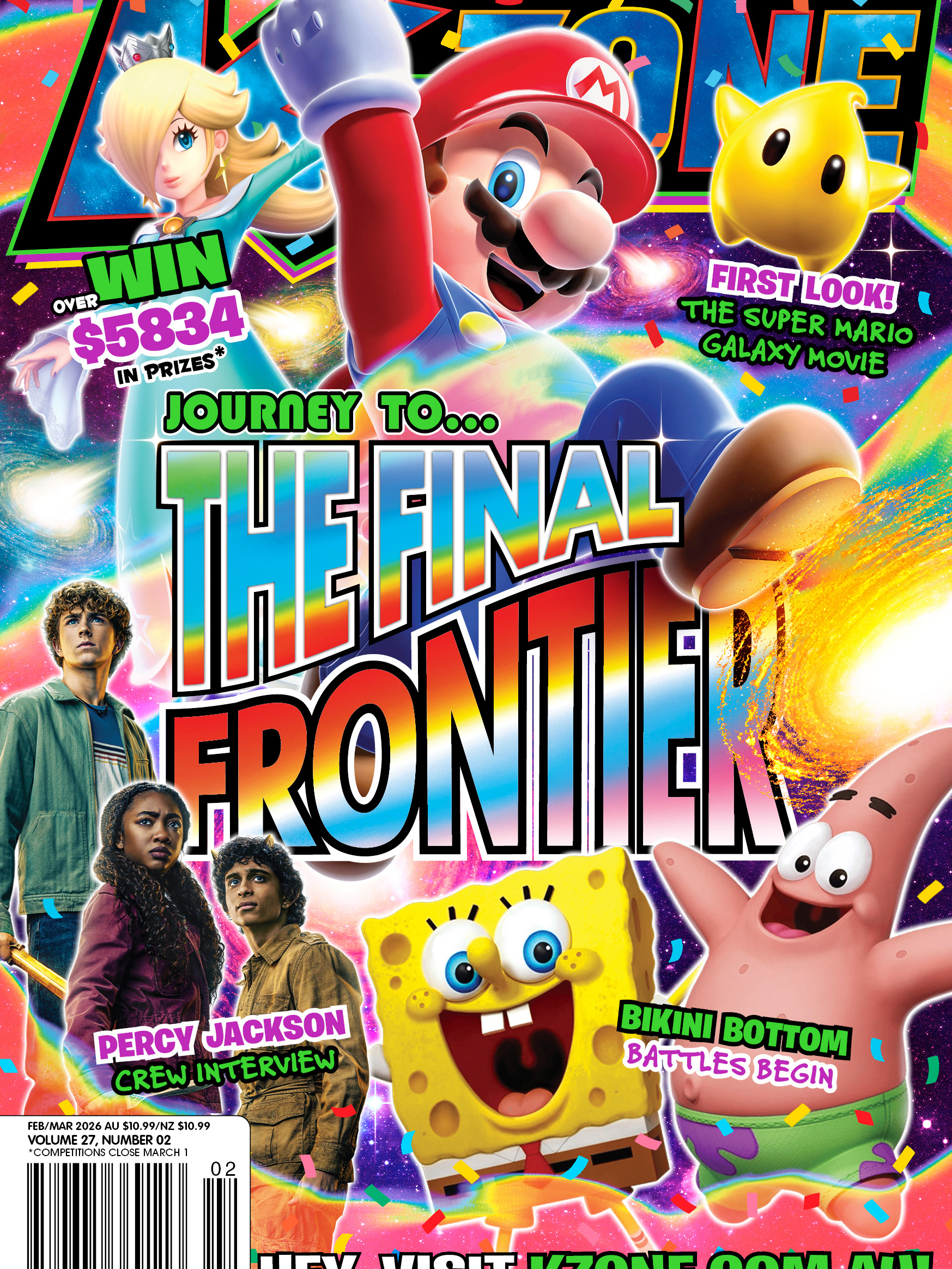
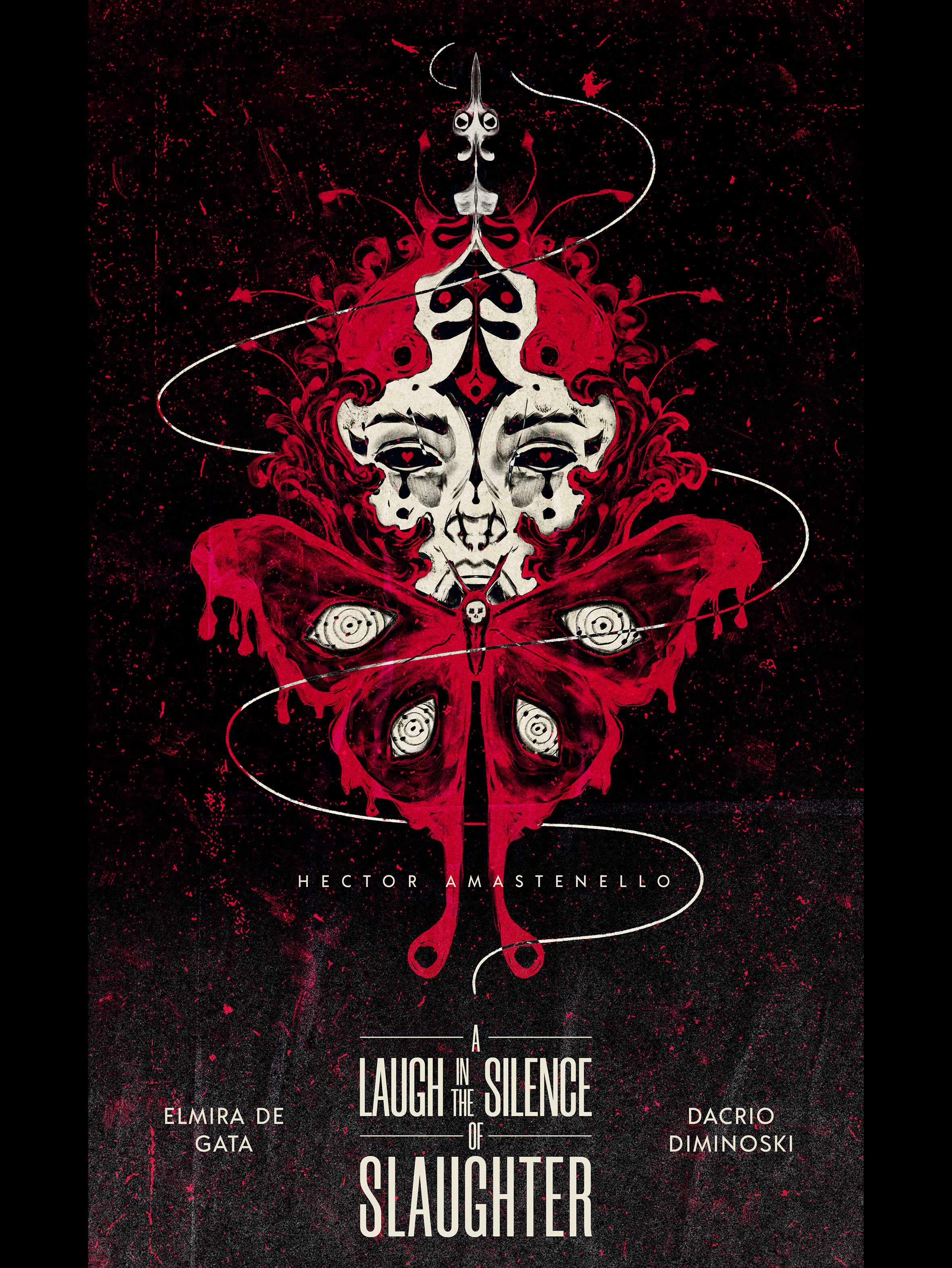
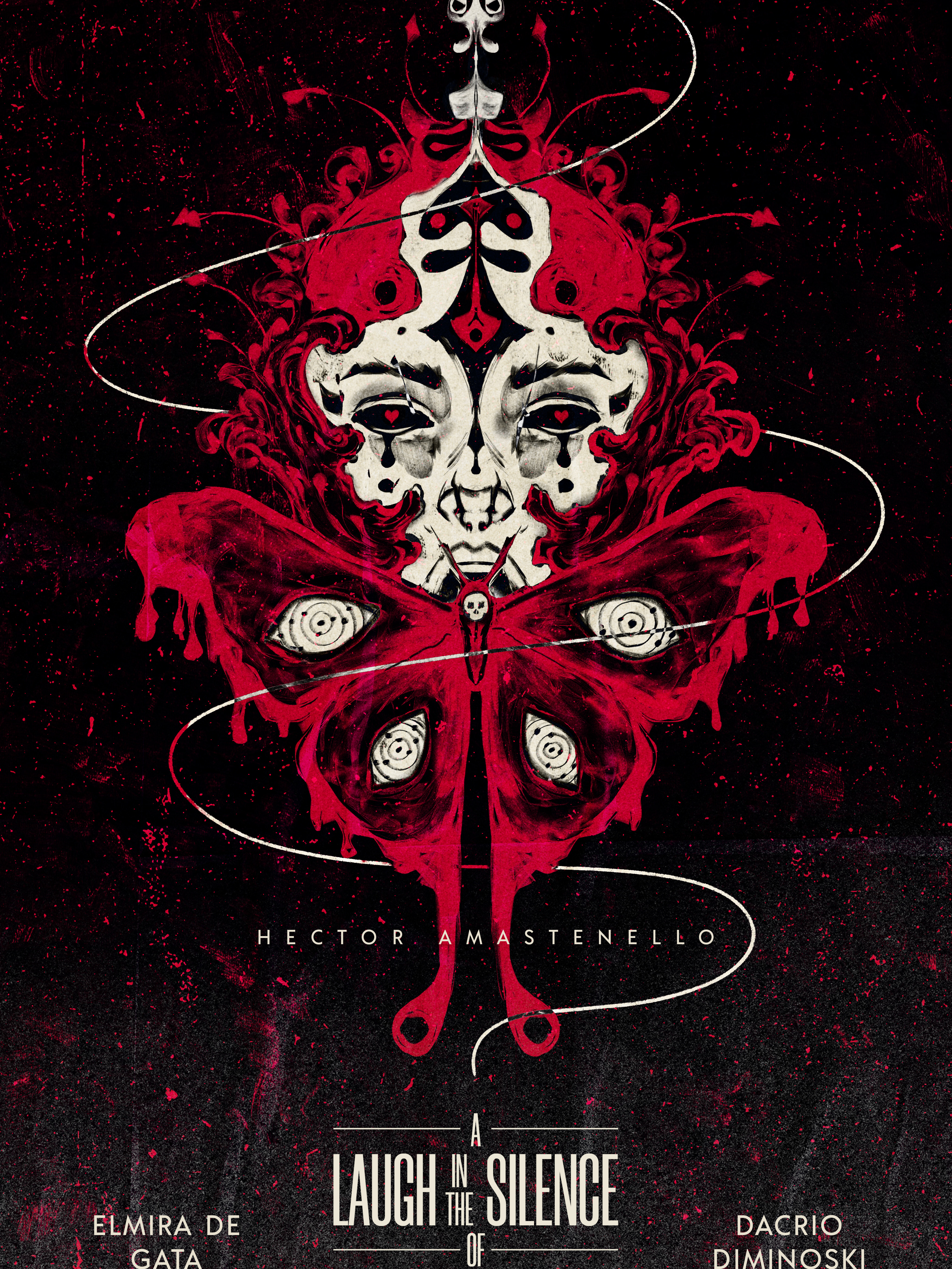
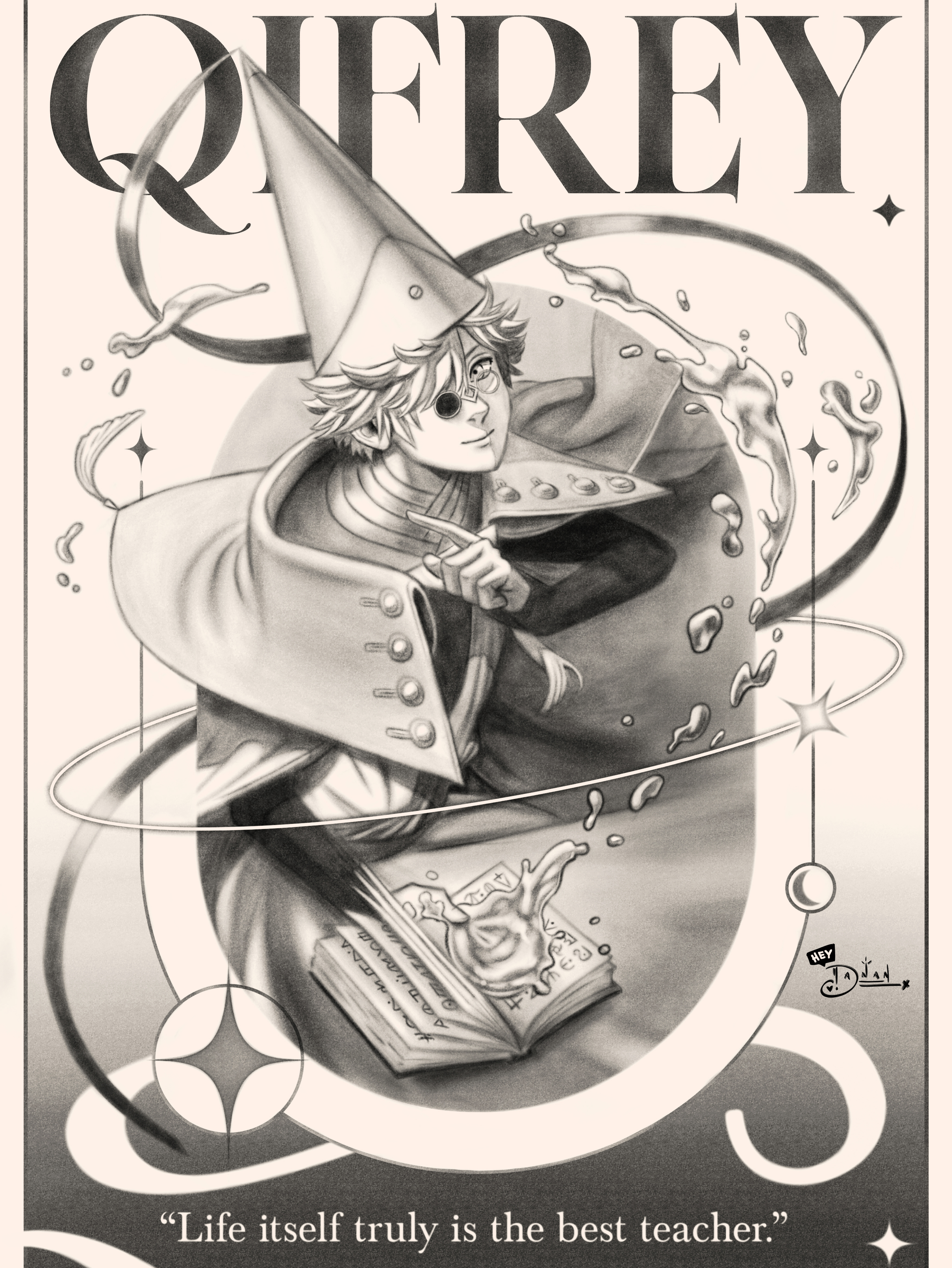
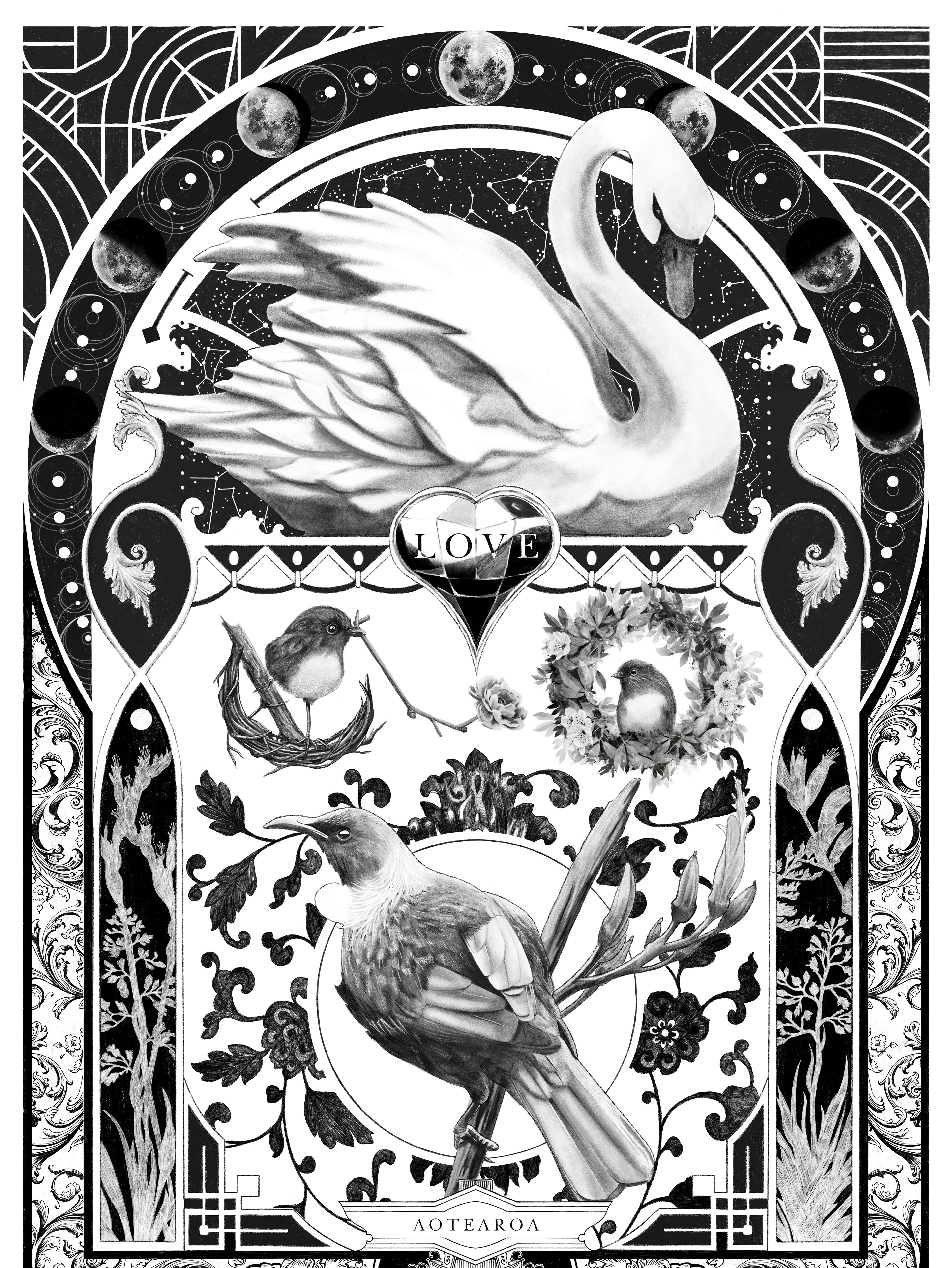
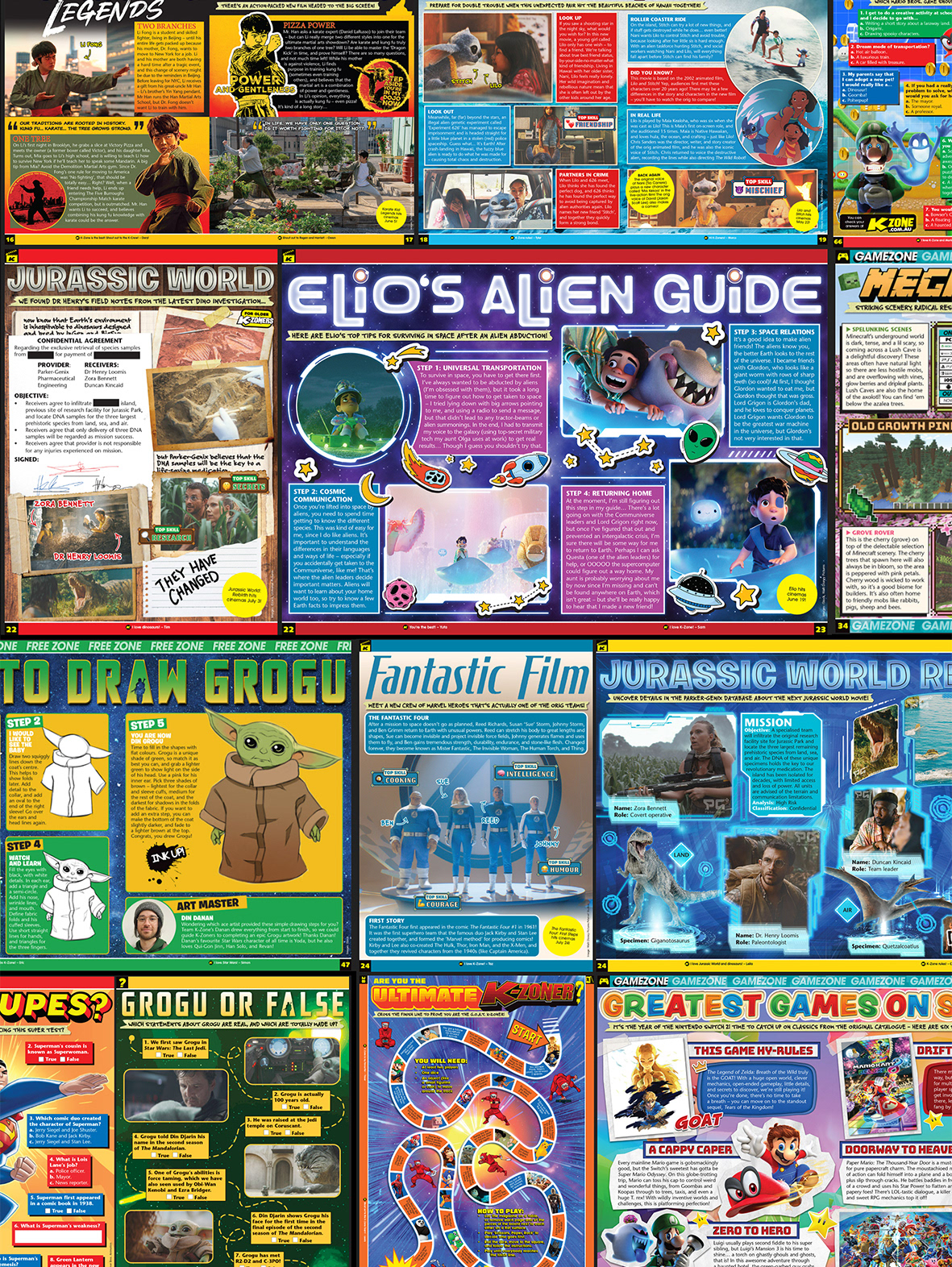
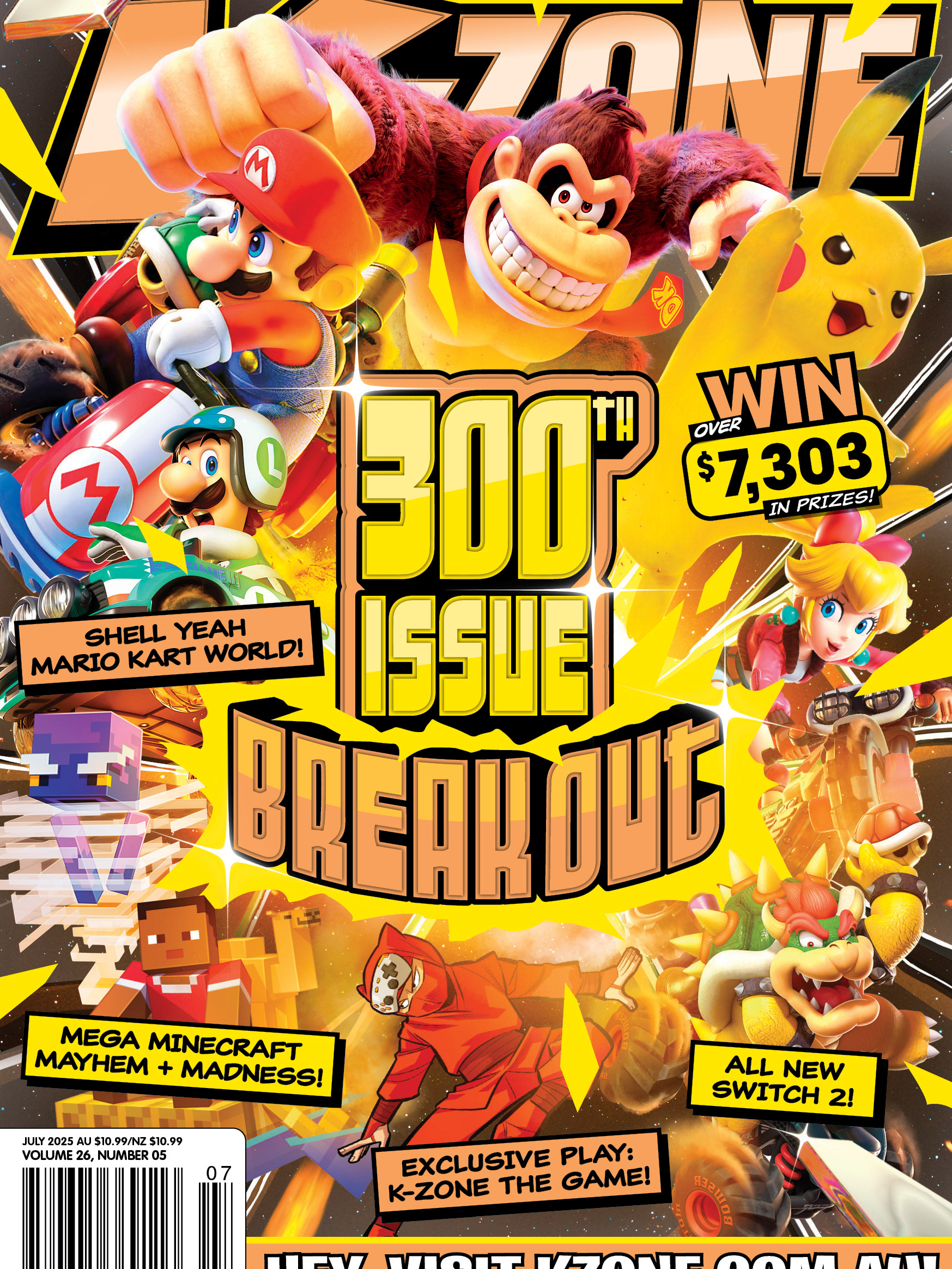
As a Subject Matter Expert for a newly developed Digital Media and Design programme by New Zealand Open Polytechnic, I created a range of educational assets including learning activities, design fundamentals examples, and assessment exemplars. A key focus of the project was ensuring the material felt visually engaging, contemporary, and genuinely connected to real-world design practice. Rather than relying on sterile or overly academic educational graphics, the goal was to create work that sparked curiosity and excitement, helping students feel inspired by the creative process itself.
The project balanced clear instructional communication with strong visual direction, ensuring the learning experience was both accessible and creatively energising.
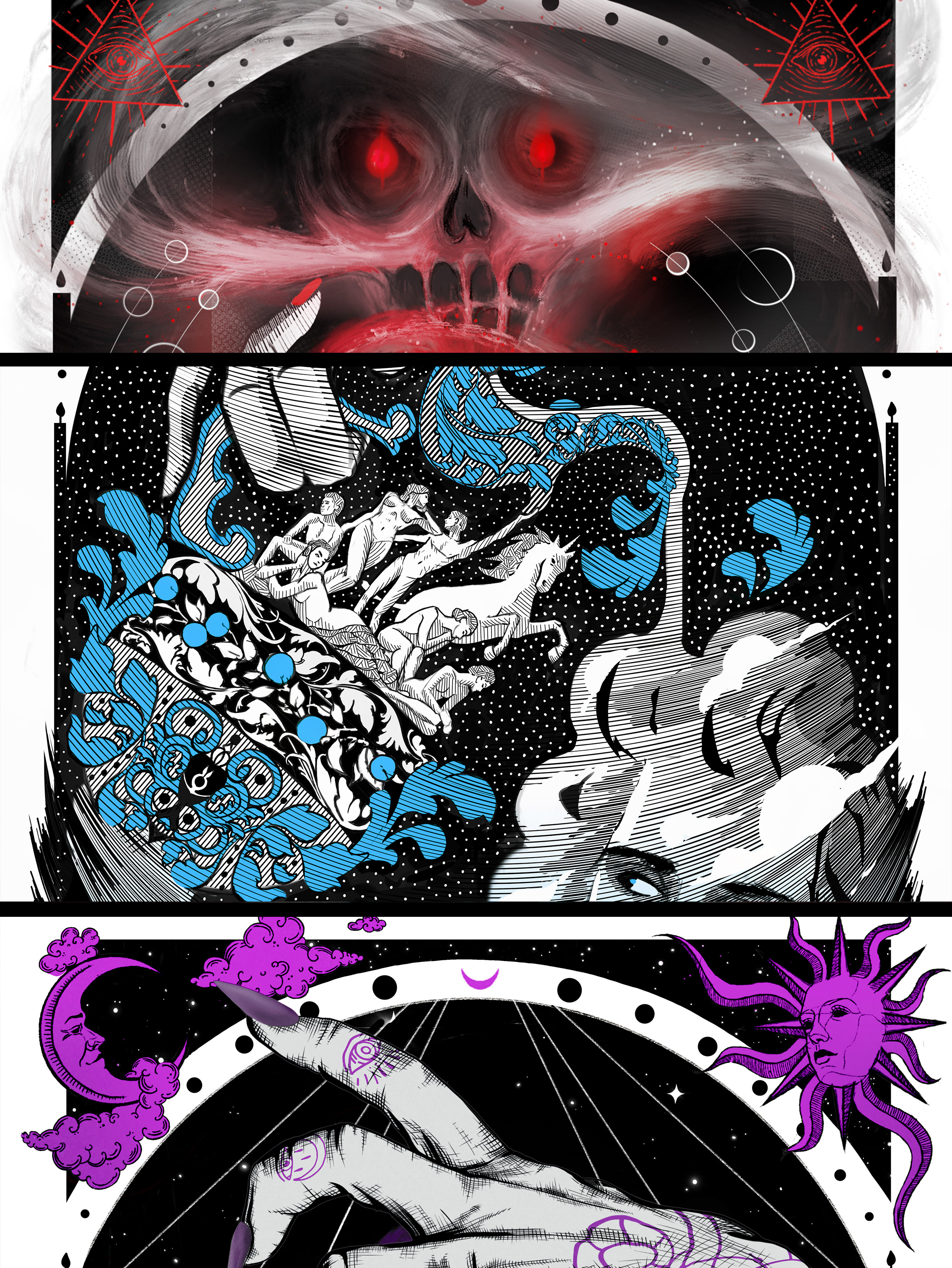
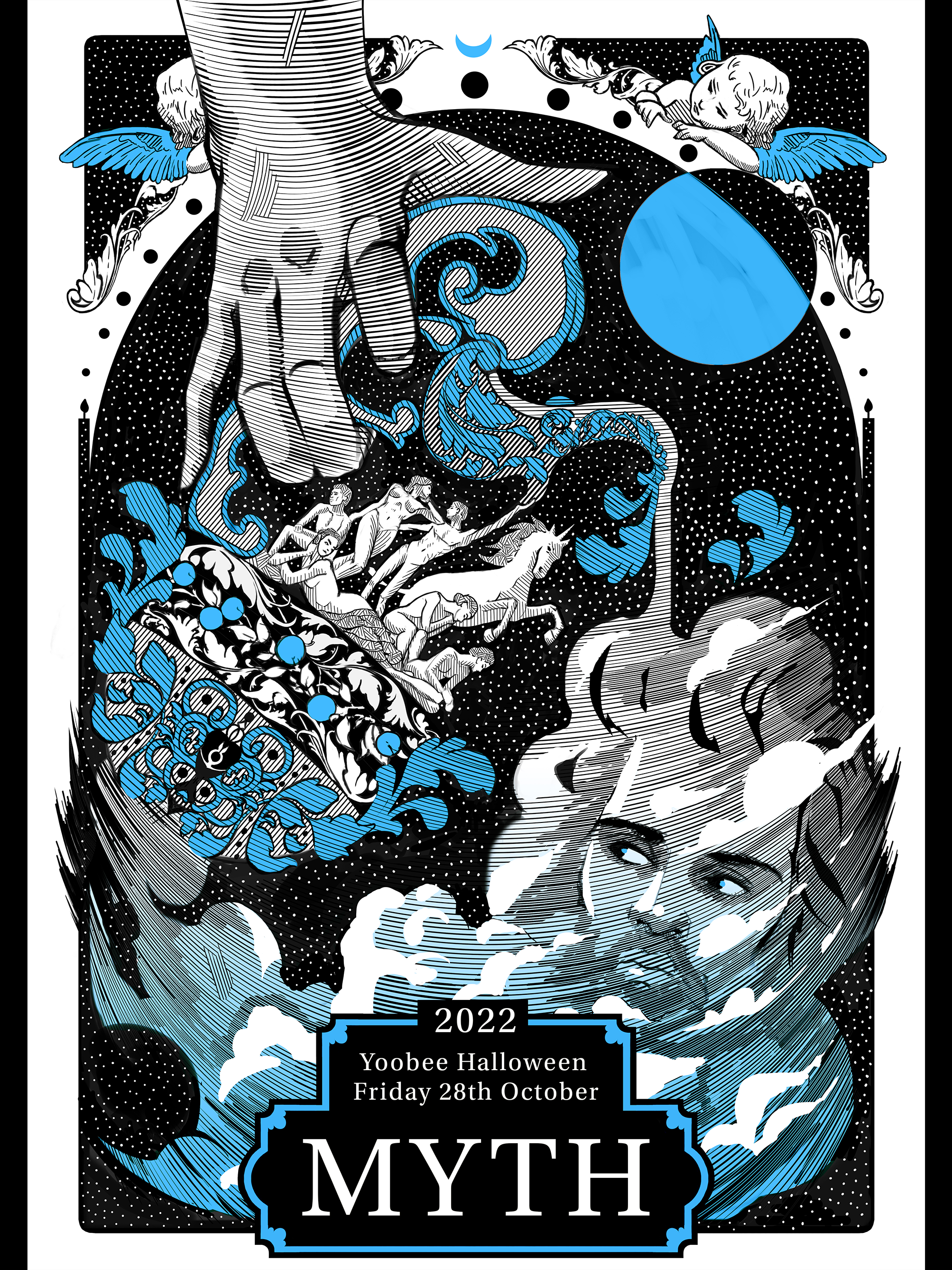
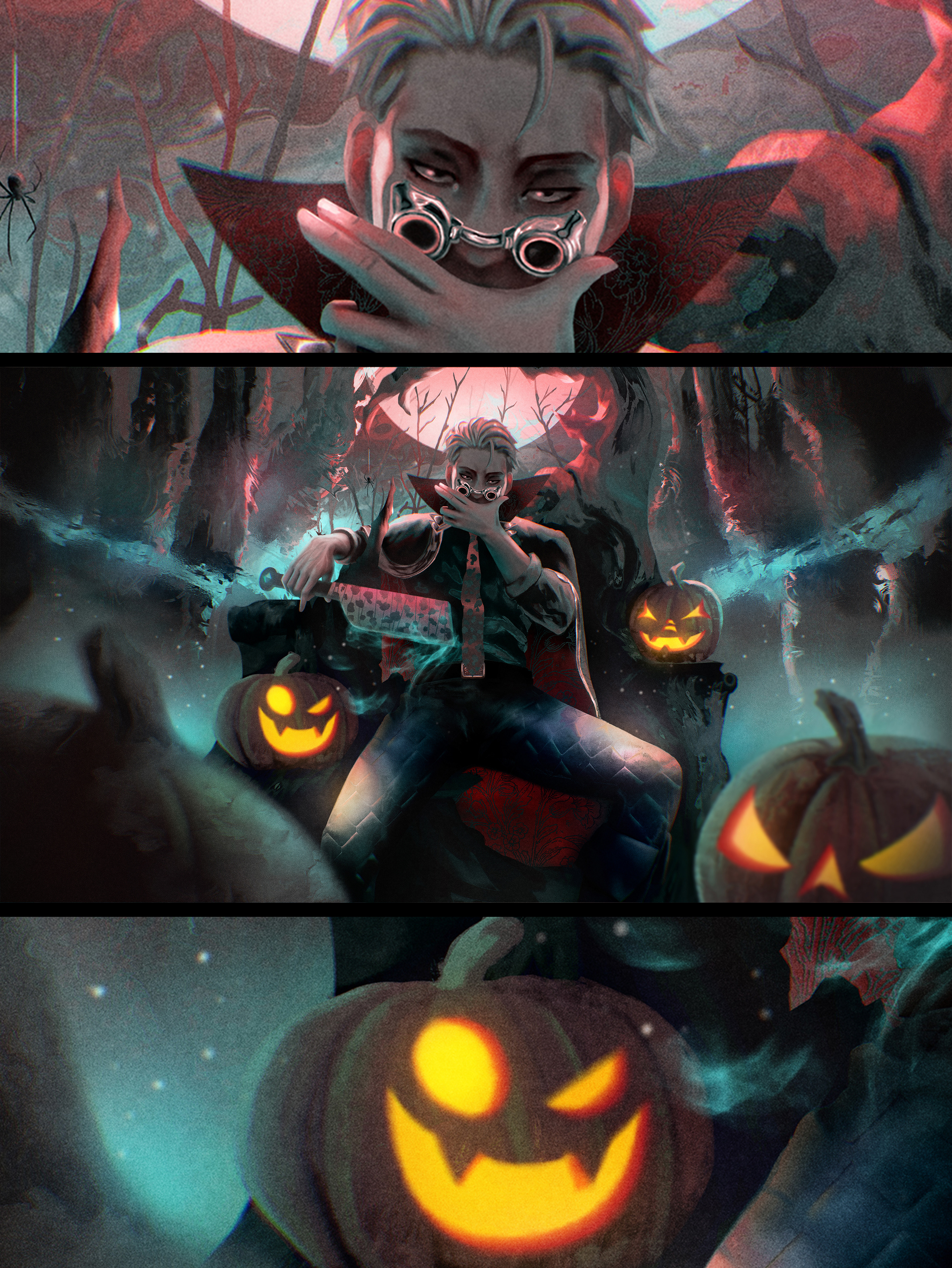
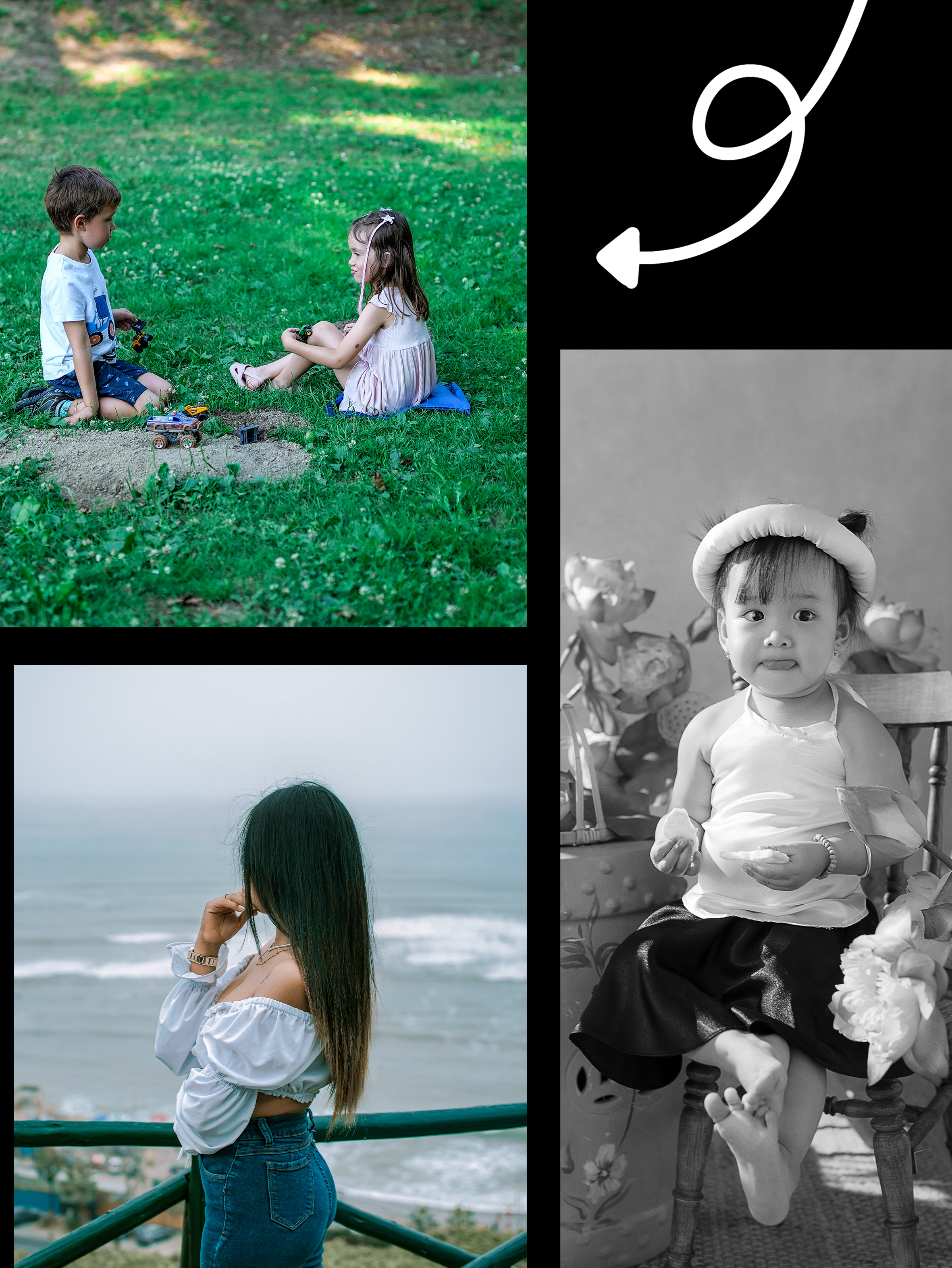
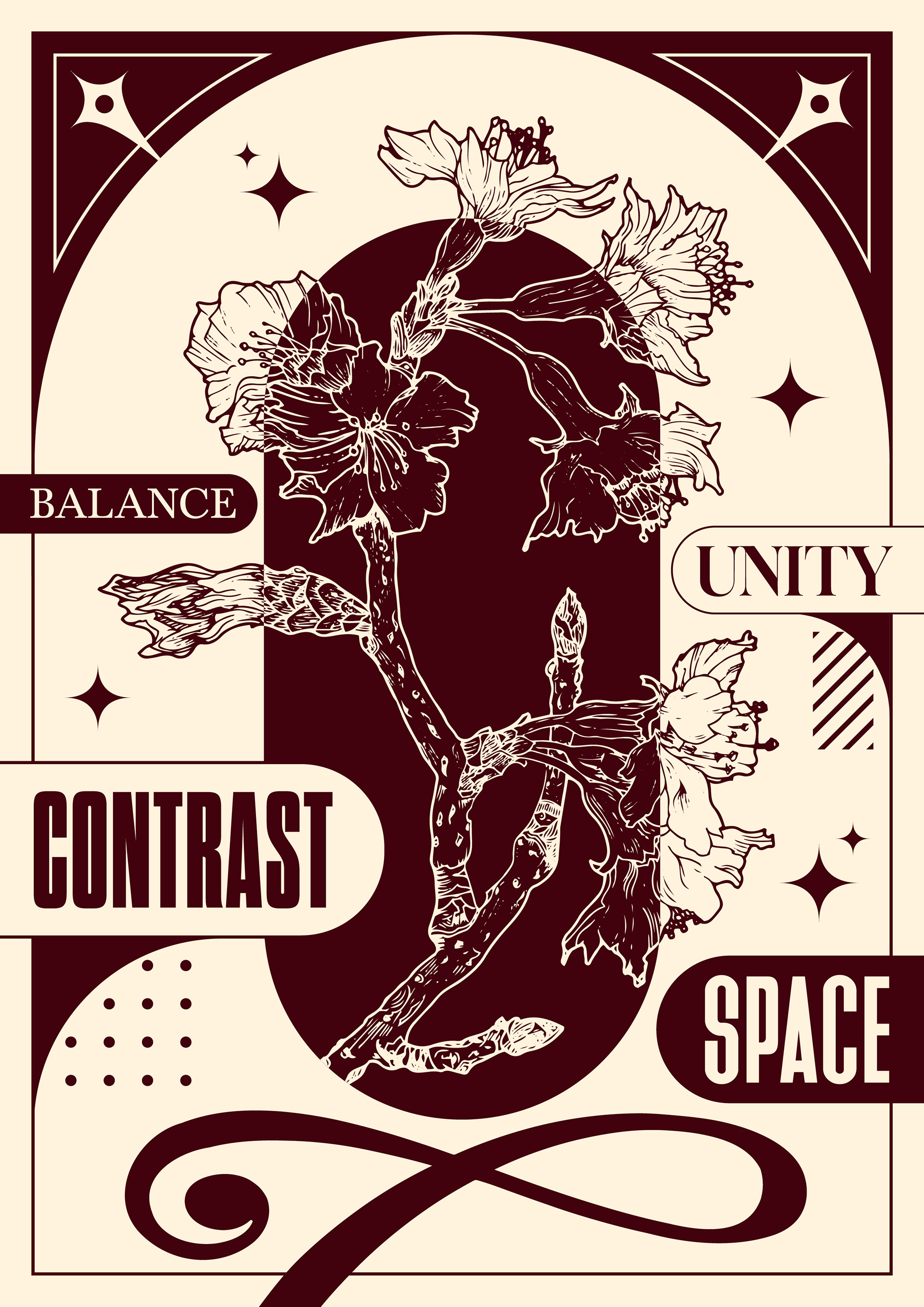
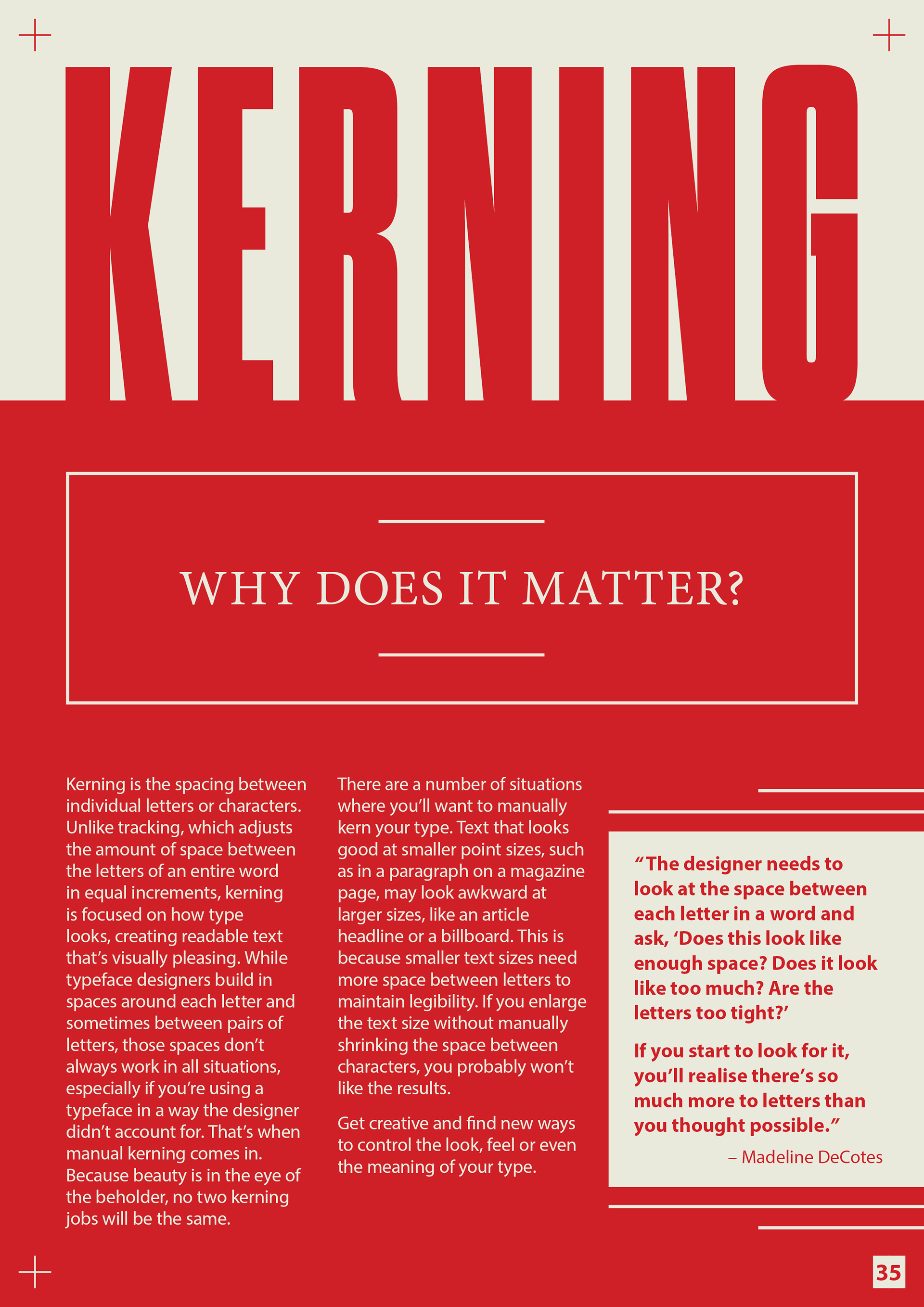
The first row showcases 4 different activities which focus on various design principles and their applications. Ranging from effective contrast and kerning usage to typographic composition and photo integration.
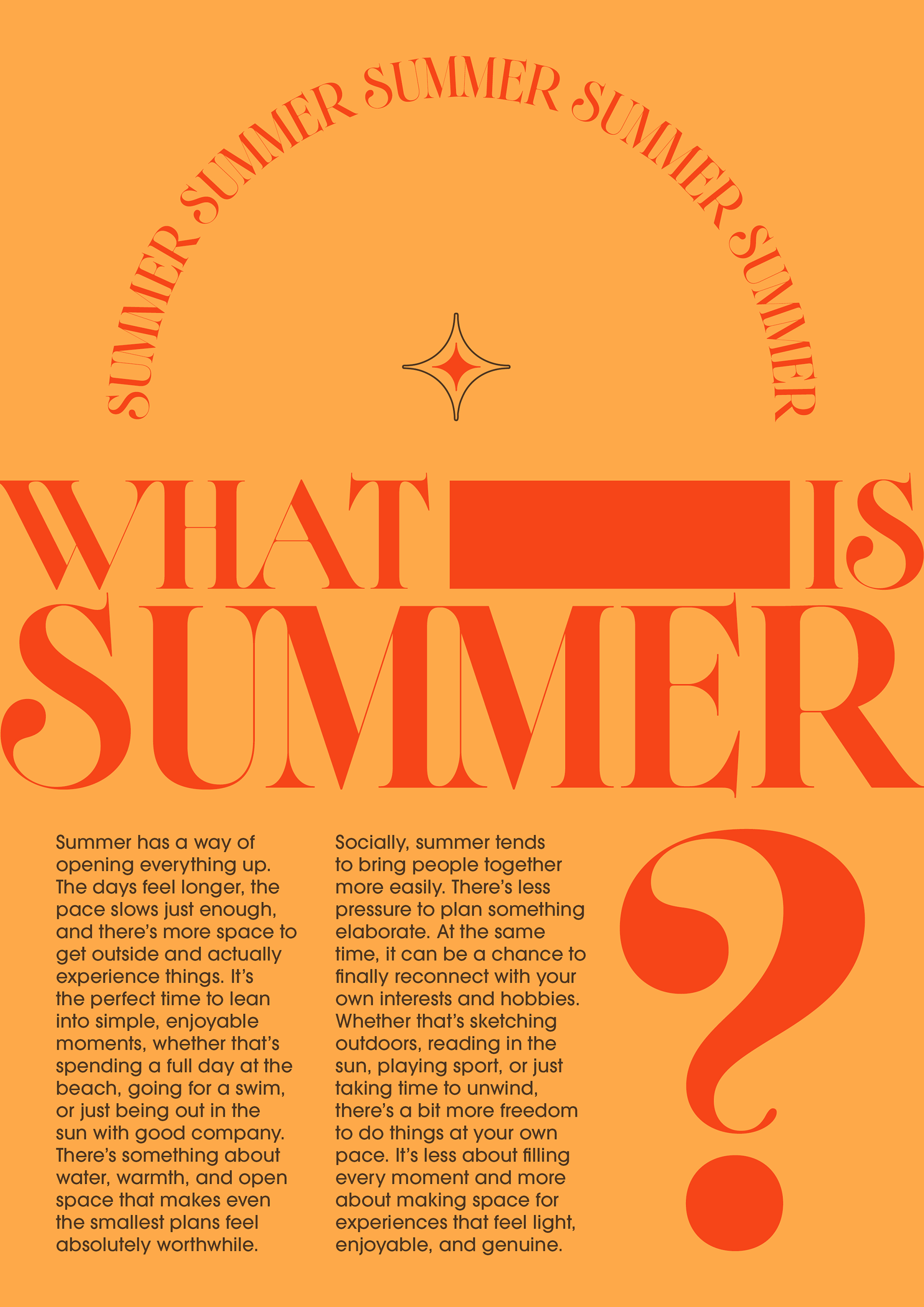

Below: how the number of columns in a grid system can be utilised to create effective designs.
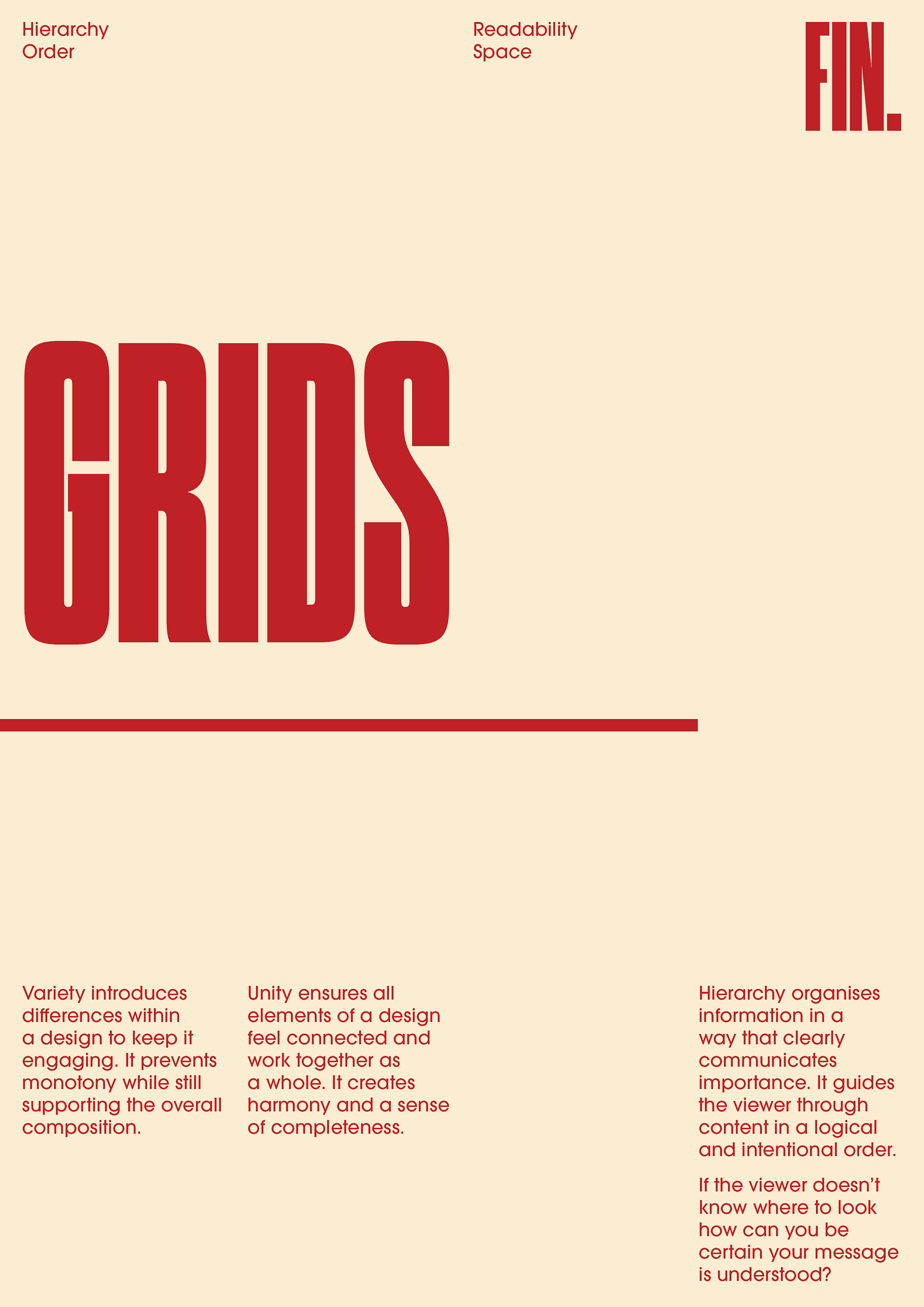
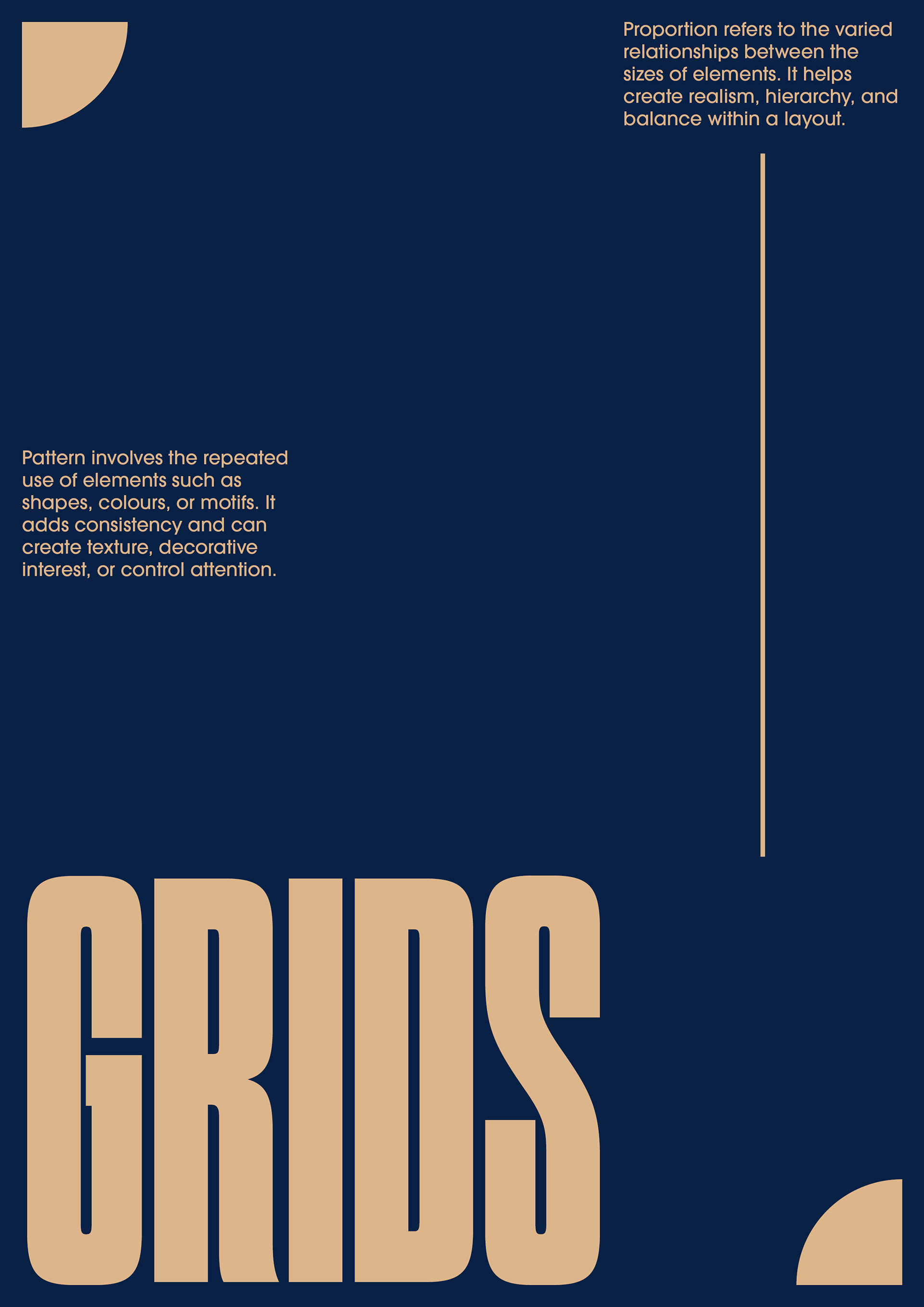
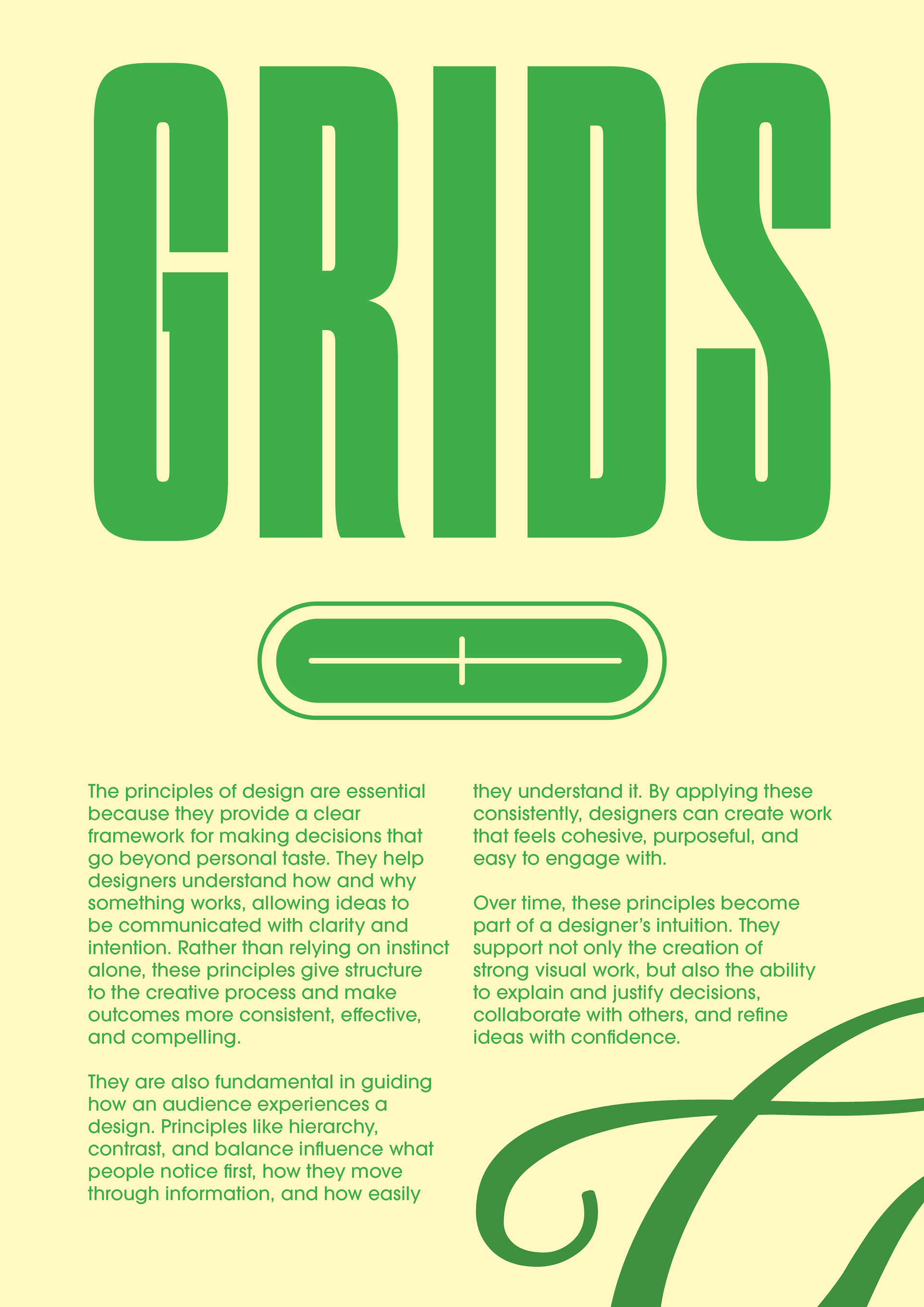
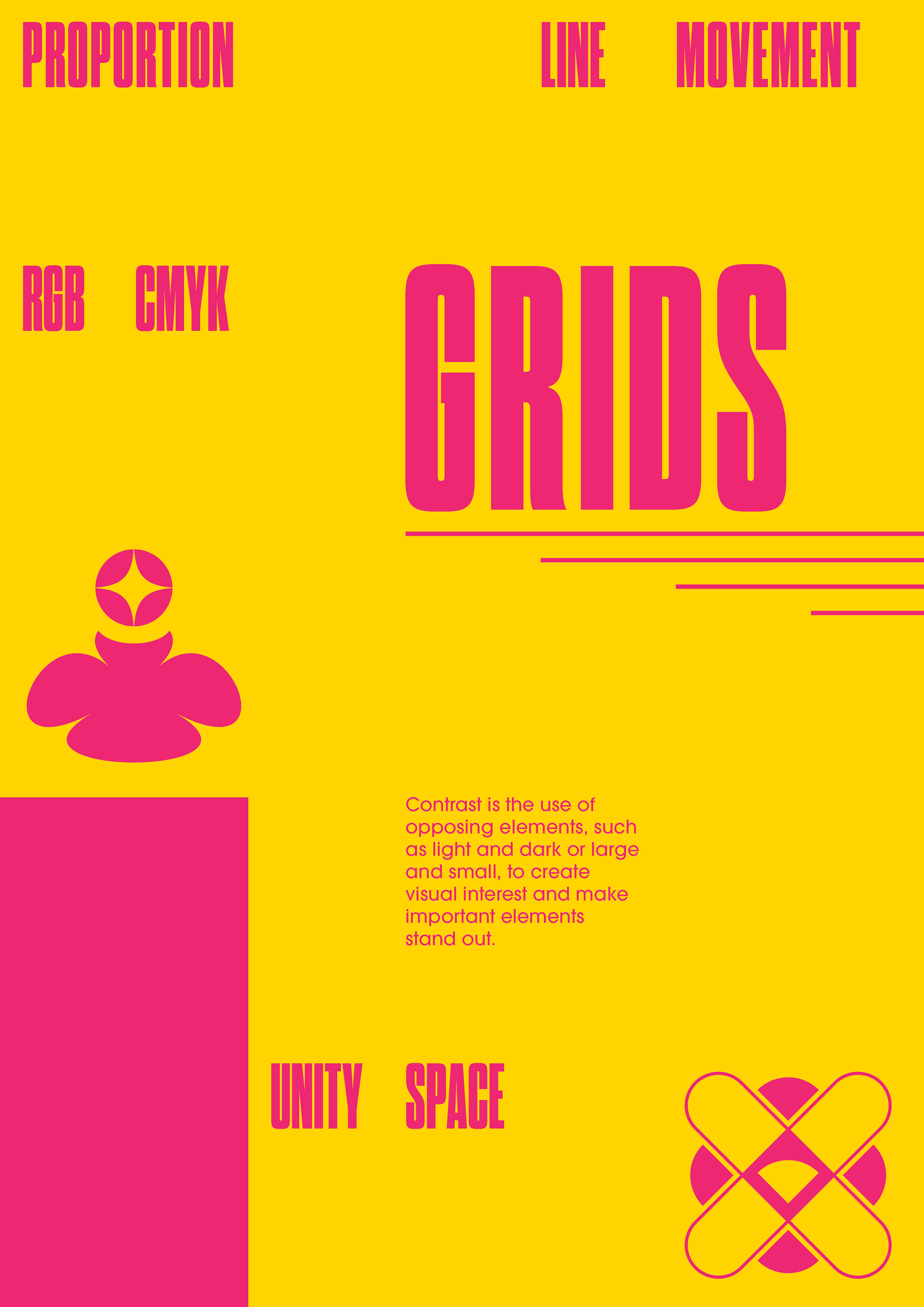
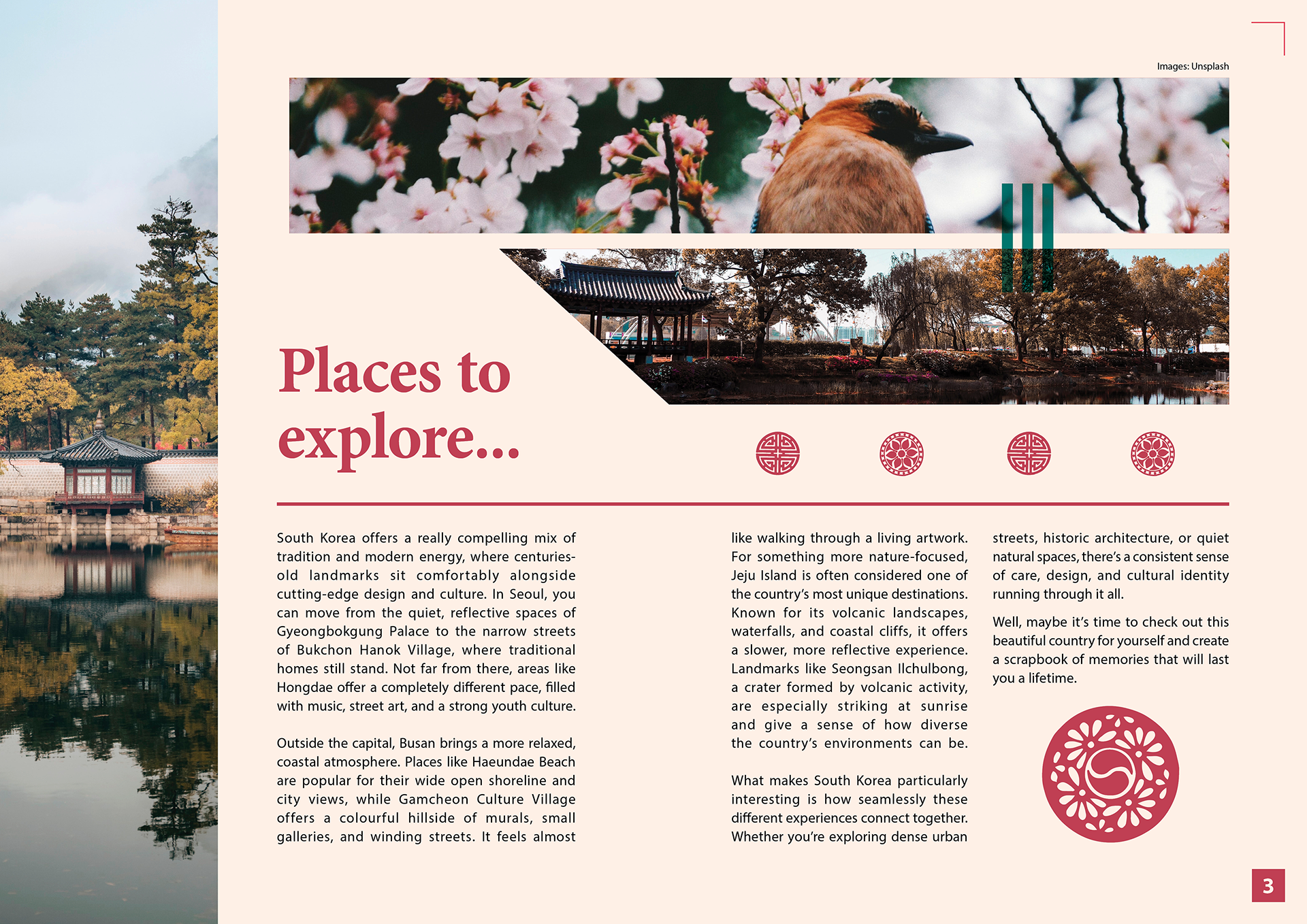
Below: Left, a brochure spread activity combining typography with photographic elements. Middle, how emphasis and hierarchy guide the viewer's attention. Right, how overlapping graphical elements can be used to create visual interesting within a simple composition.
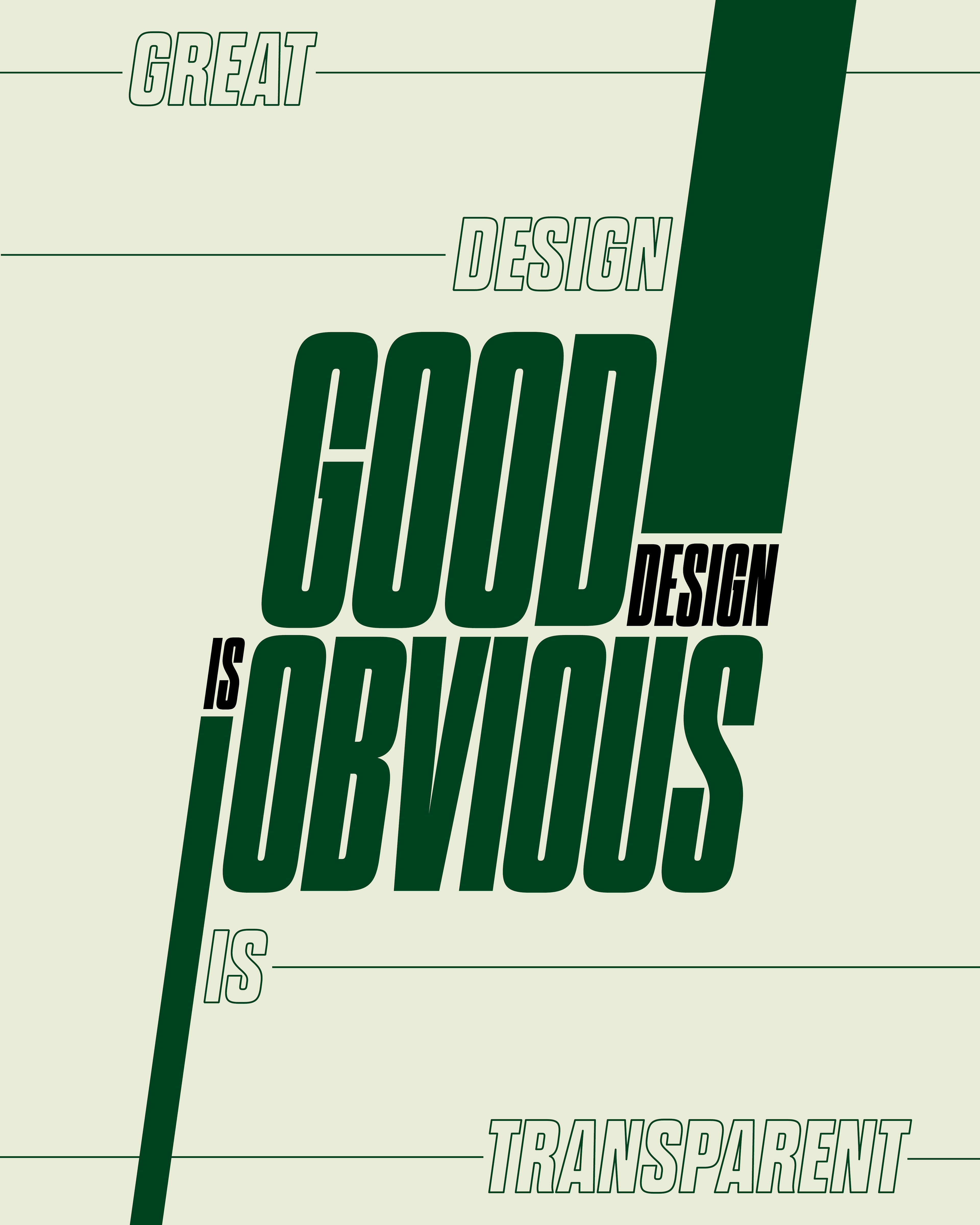
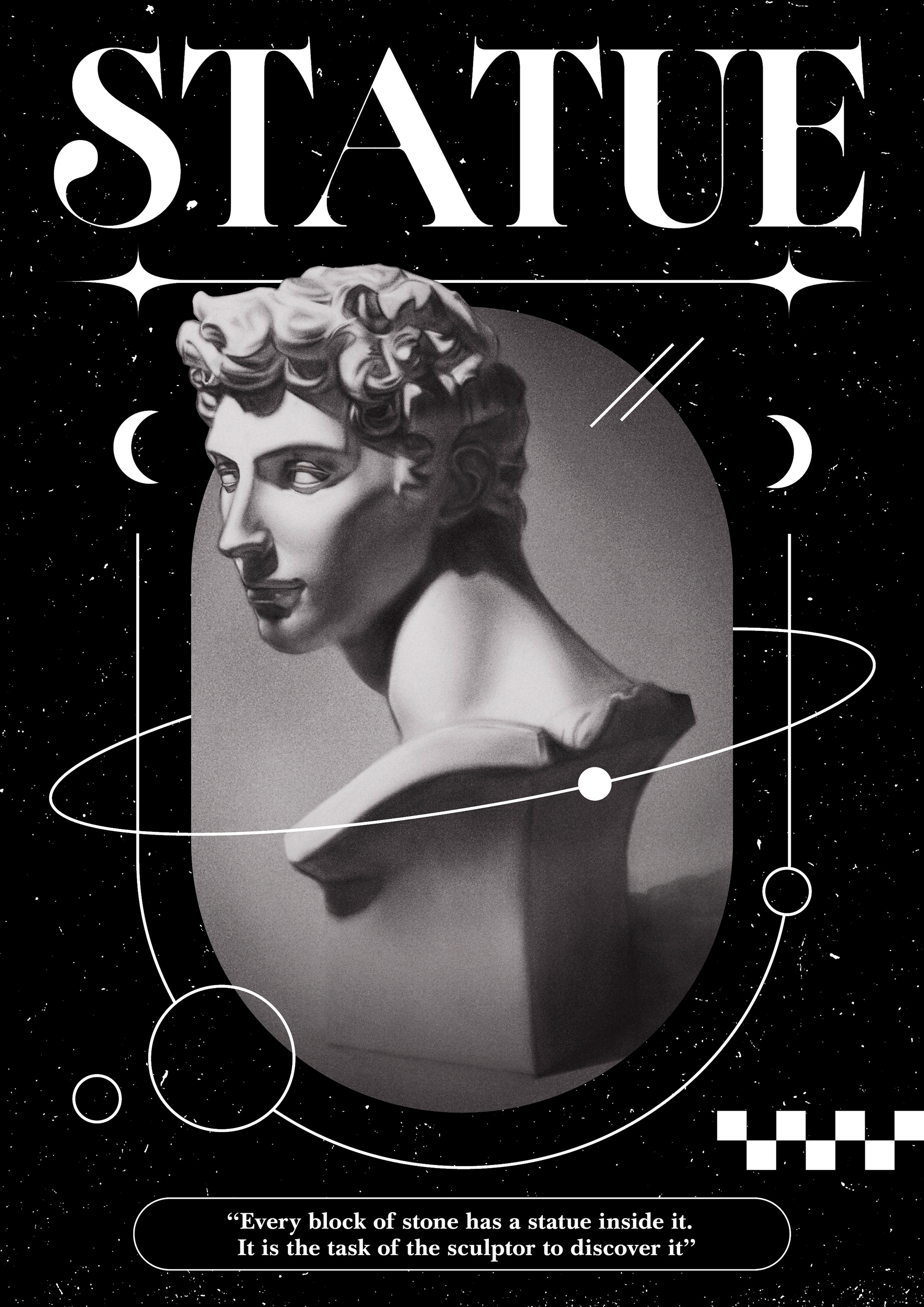
Below: Three design principles illustrated through graphical representation. Contrast (left), alignment (middle), and proximity (right).

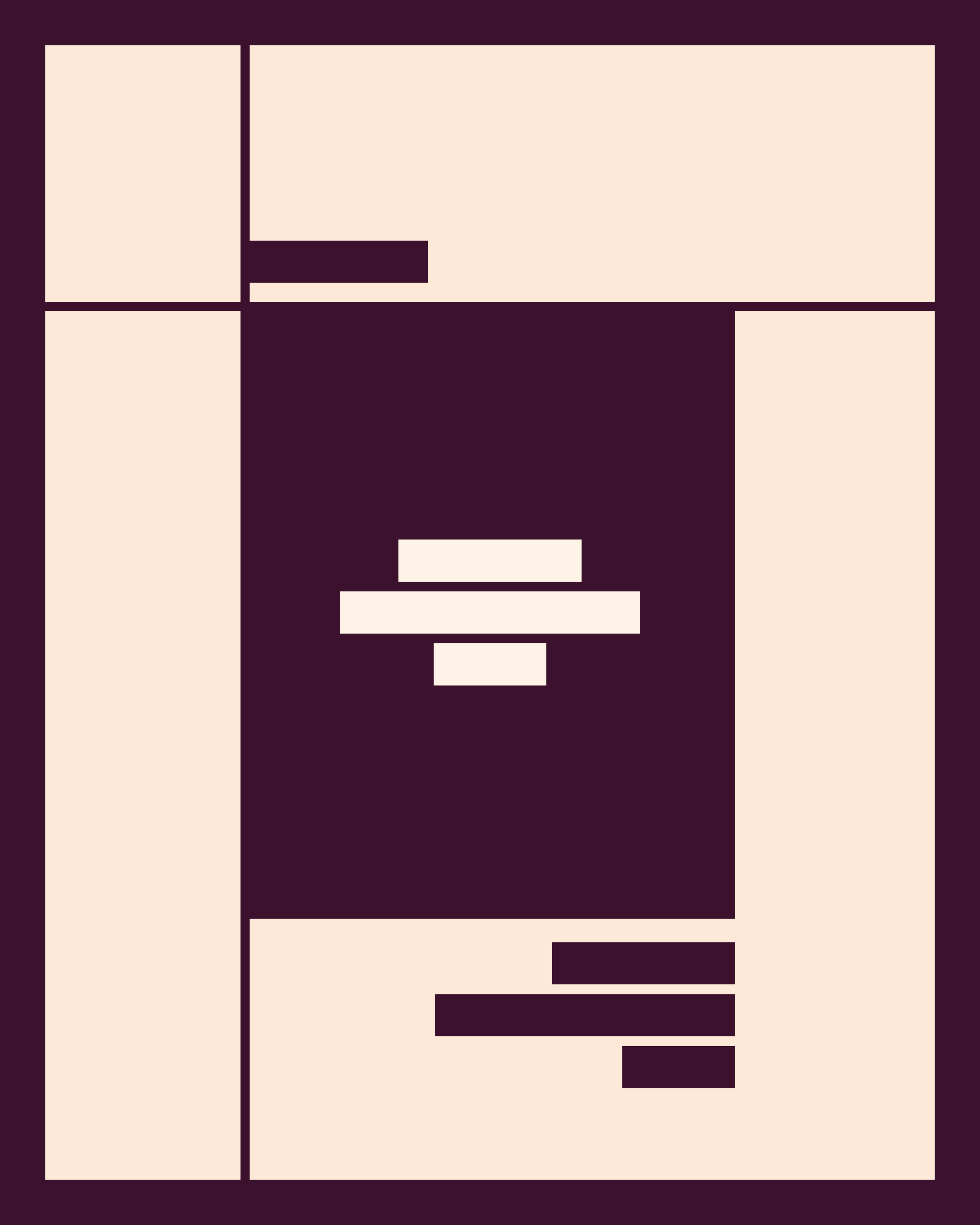
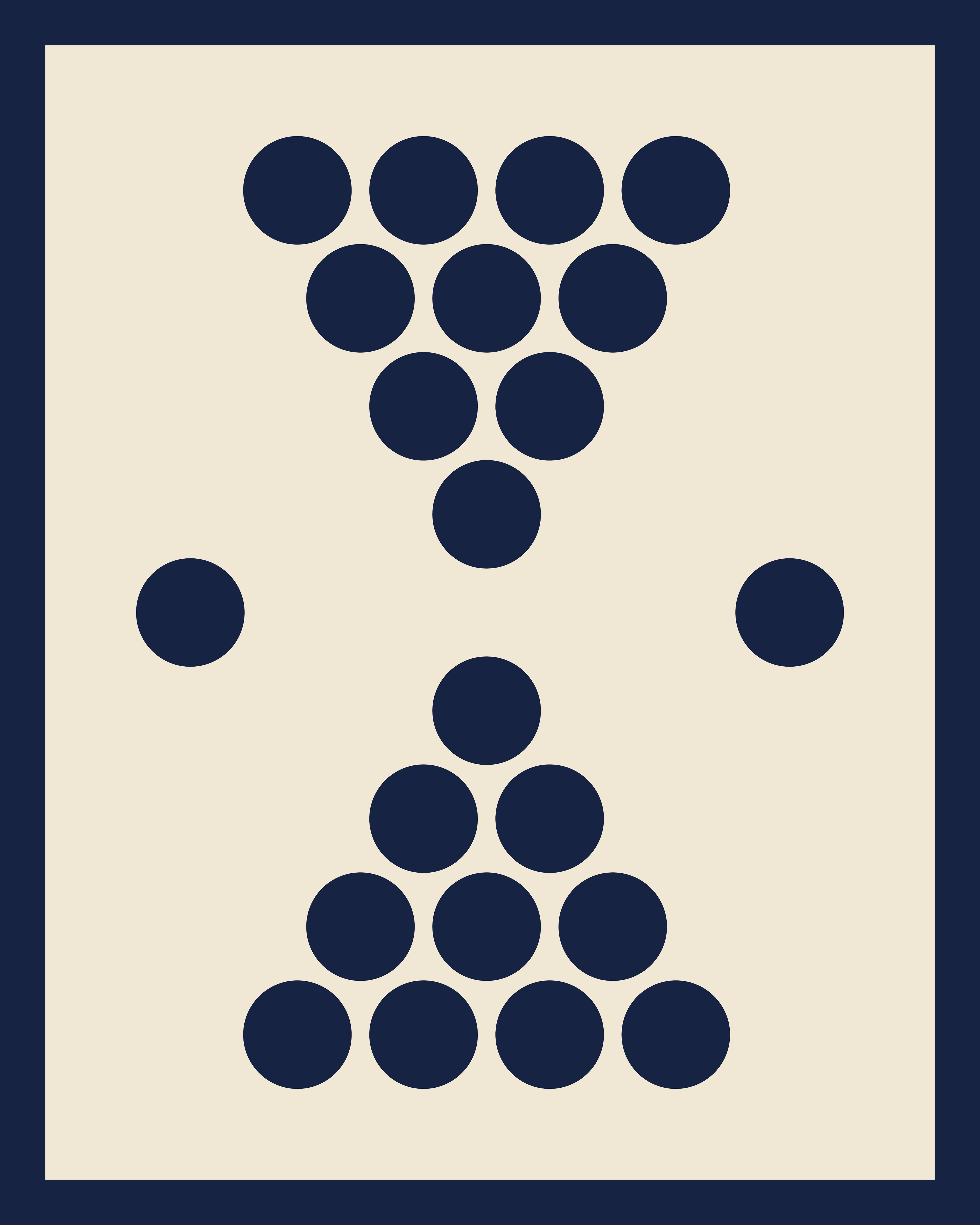
Below: how the same design can be adapted into different aspect ratios to meet outcome requirements. E.g., print media (A4) vs social media (square)